Karol Nawrocki, a known football hooligan who allegedly procured sex workers for hotel guests when he worked as a bouncer and who is accused of cheating an old disabled man out of his 1-bedroom flat, has just been elected as the President of the Republic of Poland. Ironically, Naworcki has a PhD in history and is currently serving as the head of the Institute of National Remembrance, the most important history institution in Poland. How is it possible that such a person was even allowed to run for president? Well, he was nominated as a “citizens’ candidate” by the pro-Trump national conservative Law and Justice party, which is the main opposition force towards the pro-European centre-left coalition government of Prime Minister Donald Tusk. How come this paragon of “traditional family values” secured 50.89% of votes in the run-off election and defeated the liberal mayor of Warsaw and Tusk’s ally, Rafał Trzaskowski? To answer that question I would like to recycle a text I wrote ahead of the previous presidential election in 2020. Sadly, it remains still valid.
This text is not about yesterday’s elections’, but about elections in general, or rather about democracy. The ‘rule of the people’ has not been getting good press lately. Although democracy has never lacked opponents, recently it has even been criticised by its friends. Many self-proclaimed defenders of democracy have interpreted Donald Trump’s victory in the US presidential election, the result of the referendum on the United Kingdom’s withdrawal from the European Union, the growing support for the Far Right in many European countries, and, in my Polish backyard, the electoral successes of the Law and Justice party, as signs of democracy’s alleged greatest crisis since the 1930s. Nonsense.
In 2016 Trump became US president even though the majority of Americans voted for Hillary Clinton, so if anything is to blame for the fact that a representative of the species Anus tangerinus became the leader of the so-called Free World, it is not democracy, but the archaic American electoral system dating back to pre-democratic times [this text was written before Trump won the popular vote in 2024]. Similarly, Brexit is not an argument against democracy, but further proof that referendum is a form of voting that is most susceptible to manipulation. That is why, having learned from the experience of rigged plebiscites under Hitler, the post-war constitution of the Federal Republic of Germany did not envisage referendums at the central level (except for accepting border changes). But that is not even what I mean when I say that the alleged deep crisis of democracy is nonsense.
Democracy is doing great, because to understand the successes of Trump, Farage or Kaczyński, you don’t need any conspiracy theories about Russian hackers destroying democracy from within, but just a conversation with the average American, Brit or Pole. Voting results reflect the electorate. Democracy is not about our own candidates always winning, and democracy is not working only when the majority makes wise choices, because ‘the majority is never right,’ as Dr Stockmann said in Henrik Ibsen’s play An Enemy of the People.
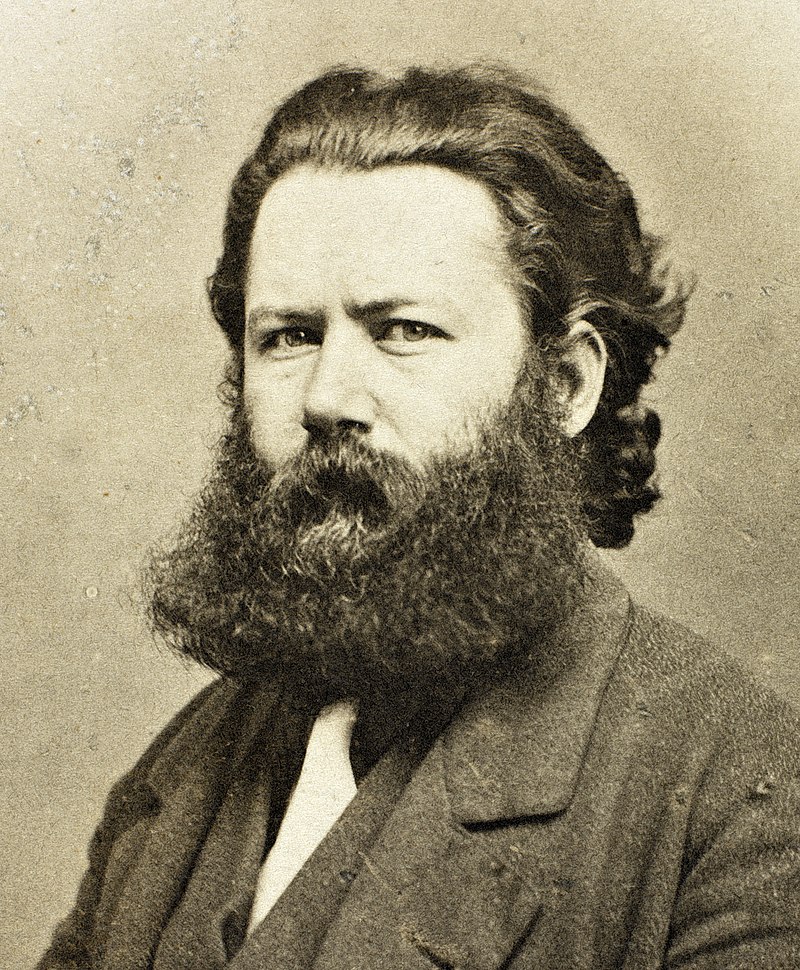
The irony of democracy is that the majority of the people get exactly what they deserve and cannot blame it on any king or tsar. The inability to come to terms with this simple fact perhaps explains the astonishing vitality of absurd conspiracy theories about Jewish Freemasonry, Russian hackers, or the recently popular Illuminati, led by Bill Gates.
And that the minority suffers the consequences of the stupid decisions of the majority? The essence of democracy was perhaps best expressed by Colonel Thomas Rainsborough during a debate in Putney Church on 29 October 1647, in the midst of the British civil war between Parliament and king. The English radical said at the time:
“For really I think that the poorest he that is in England hath a life to live as the greatest he; and therefore truly, sir, I think it’s clear that every man that is to live under a government ought first by his own consent to put himself under that government; and I do think that the poorest man in England is not bound in a strict sense to that government that he hath not had a voice to put himself under…”
I agree with this completely, even though since I have been exercising my right to vote, my candidates in parliamentary and presidential elections have almost always been defeated. However, I have never regretted being in the minority, because, as Oscar Wilde, himself a member of one of the most persecuted minorities, aptly observed, ‘when people agree with me, I feel I must be wrong.’ Whoever is elected as the president of the Republic of Poland, I will keep a close eye on them, because the majority is never right.
 History of Peace