Literature and film can be powerful tools for the promotion of peace. My blog will therefore feature a series of posts devoted to books and movies that every aspiring pacifist should know. Today I would like to introduce you to one of my favourite anti-war novels Die Waffen nieder! (“Lay Down Your Arms!”) by the Austrian peace activist Bertha von Suttner.
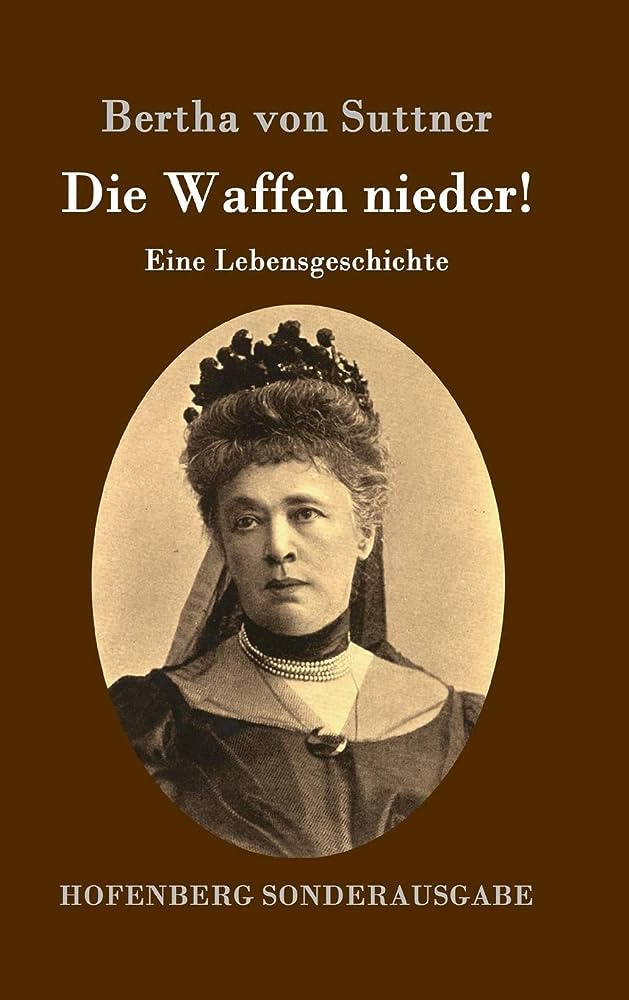
Bertha von Suttner came from an Austrian aristocratic family but devoted her life to the cause of peace. She was a close friend of Alfred Nobel and it is believed that she inspired him to include a peace prize among the awards endowed in his will. The publication of “Lay Down Your Arms!” in 1889 brought her worldwide fame and she became one of the leaders of the international peace movement. In 1905, as the first woman in history, she was awarded with the Nobel Peace Prize “for her audacity to oppose the horrors of war”. You can read her acceptance speech here.
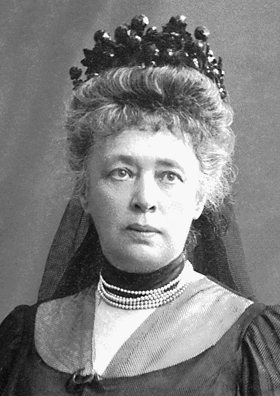
Source: Public Domain
“Lay Down Your Arms!” is a fictional autobiography of an Austrian aristocrat Martha Althaus, loosely inspired by Bertha von Suttner’s own life. Set against the background of various armed conflicts of the second half of the 19th century, the book follows Martha’s journey from a naïve war enthusiast to a dedicated peace activist. Unlike most anti-war novels and films which are told from the perspective of male soldiers, this story focuses on women who experience war on the “home front” while their sons and husbands fight and die on the battlefields. In the course of the novel Martha witnesses four major European wars: the Second Italian War of Independence of 1859, the Second Schleswig War of 1864, the Austro-Prussian War of 1866 and the Franco-Prussian War of 1870.
I have learnt about all these wars in school in the context of the unification of Italy and Germany but Bertha von Suttner’s novel showed me these events in a completely new light. Martha’s first-person account exposes the nationalism and militarism that pervaded European societies at the time and contrasts the jingoistic warmongering that preceded each conflict with the immense human suffering that was eventually unleashed by it. I wish “Lay Down Your Arms!” was a mandatory reading in school as it would add a different dimension to history lessons on Otto von Bismarck, Camillo Cavour and the other “great men” of the 19th century whose cunning strategies resulted in bloodbaths that killed hundreds of thousands of ordinary soldiers and turned their wives and children into widows and orphans.
The importance of education in the promotion of peace is another aspect of the novel that makes it still relevant today. In the first part of the book, the narrator Martha describes how history textbooks indoctrinated her with a blind enthusiasm for all things military and made her envious of men who achieved glory on the battlefield. Following the lessons of the two world wars, contemporary history textbooks are not as militaristic as those in the 19th century, but I am sure that similar emotions were awakened in many of us (me included!) by history classes in our schools. Unfortunately history education across the world is still largely focused on “great men” (mostly political leaders and military commanders) and presents the past as a chain of conflicts between states, nations, ethnic groups and social classes. However, in order to eliminate war once and for all, we need to start building a culture of peace through education. If everyone read Bertha von Suttner’s novel at school, they would be less susceptible to nationalistic propaganda and warmongering in their adult lives.
The book ends with a prophetic warning about a catastrophic war that might break out in Europe if the logic of militarism is not abandoned. Bertha von Suttner dedicated her whole life to prevent this from happening. She died a few weeks before the outbreak of the First World War. More than a hundred years later, when the threat of another global conflagration is greater then ever, Bertha von Suttner’s call to lay down our weapons is again relevant. Will we listen to her this time?
 History of Peace
